

Military Student Persona Insights: What Educators Should Know
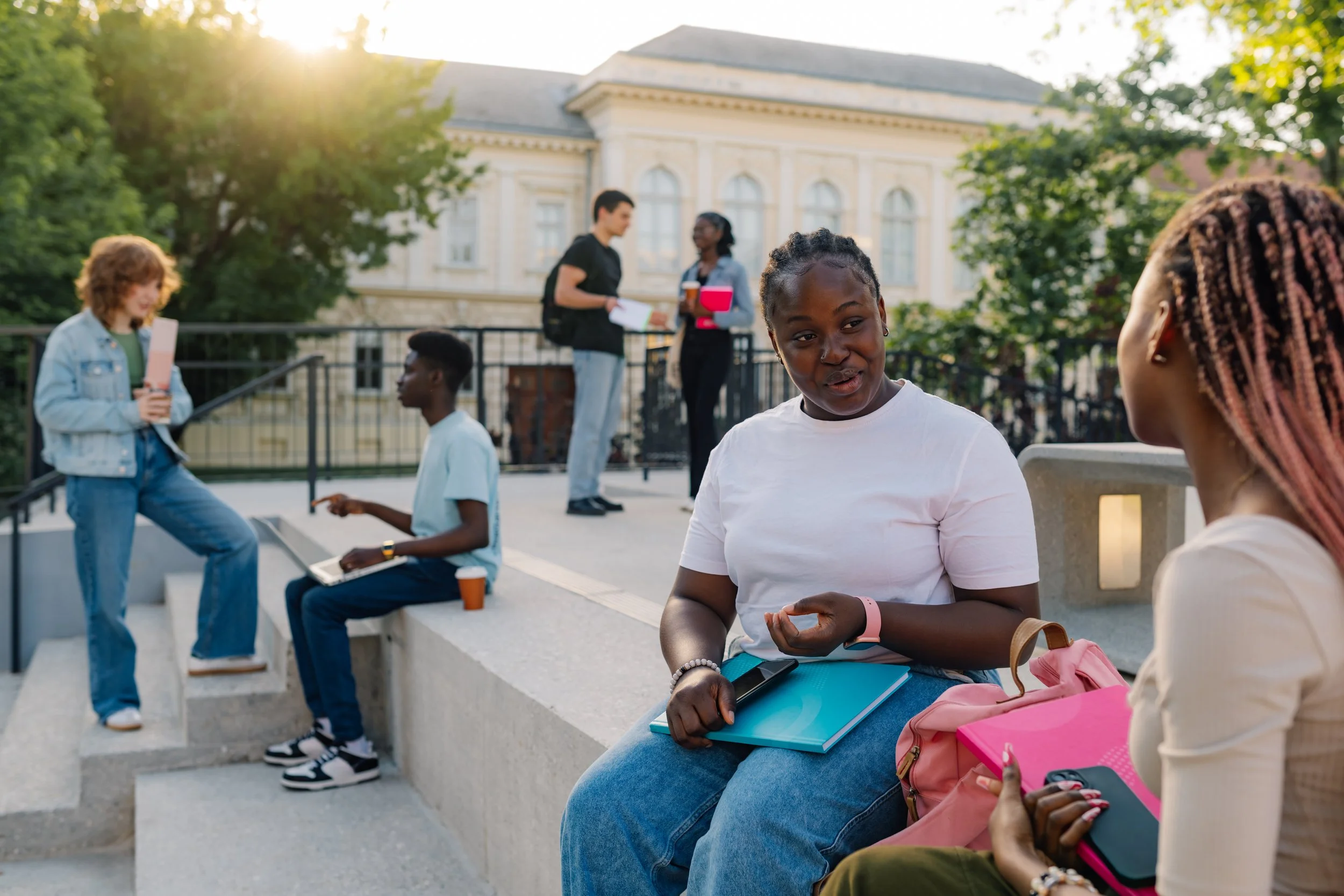
Higher education has become increasingly sophisticated about student segmentation. Institutions know that prospective students differ by age, geography, academic interest, income, and enrollment intent. Yet military-connected students are still frequently grouped into a single category: veterans.
That category is useful for reporting. It is not particularly useful for understanding people.
A military-connected student persona should reveal the circumstances behind a student's enrollment decision. It should help an institution understand what brought that student to higher education, what could interrupt the journey, what they expect from an institution, and what success means to them.
For educators and enrollment leaders, that distinction has practical consequences. The better the persona, the more accurately an institution can design the experience around the student.
A Military Affiliation Is a Starting Point, Not a Persona
Consider two students who are both using Post-9/11 GI Bill® benefits.
One is a recently separated service member who wants to convert military experience into a civilian career. Another is a career military member completing a degree one course at a time while stationed overseas.
Their benefit status may look identical in an enrollment database. Their educational decisions are not.
The same applies to military spouses and dependents. A spouse pursuing a degree after several relocations may be evaluating a university primarily on portability and career continuity. A dependent student may be making a conventional college decision while simultaneously navigating the experience of having a parent deployed.
The label explains the connection to the military. The persona explains the context.
That is an important distinction for institutions investing in military-connected enrollment.
What a Useful Persona Actually Reveals
A strong persona moves beyond demographic characteristics. It brings together the factors that influence how a student interacts with an institution.
For military-connected learners, those factors can include:
Educational history. Has the student attended multiple institutions? Are they transferring military or prior-learning credit? Are they returning to education after several years?
Military context. Is the student active duty, a veteran, a spouse, a dependent, or a member of the Guard or Reserve? Is their military affiliation likely to change during the degree?
Career objective. Is education intended to support advancement, career transition, professional licensure, or exploration of a new field?
Life circumstances. Does the student anticipate relocation? Are work, childcare, deployment, or family responsibilities likely to affect enrollment?
Institutional expectations. What does the student assume the university will understand without explanation?
These dimensions begin to explain behavior that enrollment data alone cannot.
Research published in the Journal of College Access in 2025 offers a useful example. Henderson, Johnson, and Martin found that military-connected students' experiences with college access were influenced by advising, communication, and institutional policies. The study illustrates how seemingly administrative details can become part of the student decision-making experience.
For institutions, that is valuable intelligence. A persona can show where those details matter most.
The Most Valuable Persona May Reveal Institutional Friction
Personas are often created to help marketers write better messages. Their greater value may be diagnostic.
Suppose an institution's active-duty persona indicates that the student needs predictable scheduling and rapid answers because duty obligations can change with little notice.
That insight has implications for more than a campaign.
It may raise questions about advising hours, registration processes, faculty communication, course sequencing, and how quickly military-related changes can be accommodated.
A military spouse persona may reveal that transferability is a primary concern. That could prompt an institution to examine how clearly it communicates its transfer policies and how efficiently it evaluates credits.
A veteran persona focused on career transition may expose another issue: the institution's academic program is compelling, but its career outcomes are difficult to find.
In each case, the persona becomes a way to examine the institution through the student's decision-making process.
That is where persona work becomes particularly useful to educators.
Military Students Also Bring Assets to the Classroom
There is another dimension that deserves more attention in persona development: what military-connected students contribute.
Military experience can include leadership, technical training, work in complex environments, cross-cultural exposure, and early-career responsibility. Those experiences can shape classroom participation and academic goals.
They can also create frustration when students feel that their prior experience is not understood or appropriately recognized.
A 2024 study of student veterans transitioning from community colleges to four-year institutions found that students valued connections between academic work and their professional lives, as well as guidance on navigating college expectations (Summers, 2024).
That finding points toward a more productive approach to military student personas. The institution should understand not only the barriers a student may encounter, but also the expertise they already possess.
The question becomes less about accommodating a deficit and more about designing an academic experience that recognizes the student's starting point.
Belonging Requires More Nuance Than a Military-Friendly Label
There is also a temptation to assume that military-connected students automatically want military-centered experiences on campus.
That assumption deserves scrutiny.
A 2025 study examining student service members and veterans found differences in campus belonging, belonging within academic majors, and institutional satisfaction when compared with civilian students. The findings suggest that military-connected students' sense of connection to the institution can be shaped by factors that extend well beyond the presence of a veteran resource center (Benbow et al., 2025).
For educators, this creates a more interesting question.
What kind of connection does a particular student actually want?
Some students may seek a strong military community. Others may want their military background recognized without making it central to their college identity. A well-developed persona leaves room for both.
Persona Work Should Reach the Classroom, Not Stop at Admissions
The strongest military-connected personas have a life beyond the enrollment funnel.
Admissions teams can use them to understand questions prospective students are likely to ask. Marketing teams can use them to develop more relevant content. Advisors can use them to anticipate common points of friction. Faculty can gain context for understanding students whose educational histories may differ from those of their peers.
Institutional leaders can use persona insights to identify gaps between what the university promises and what military-connected students actually experience.
That last application may be the most important.
A persona is not successful because it produces a more personalized email. It is successful when it helps an institution make a better decision.
From Student Profile to Institutional Intelligence
MissionWise approaches military-connected personas as an institutional strategy tool rather than a marketing exercise.
The work begins with understanding the population, but it extends into the decisions that shape recruitment, enrollment, student experience, and long-term success. That perspective is particularly important for institutions serving multiple military-connected populations, each with different circumstances and expectations.
Military Student Success Stories: Lessons Learned examines several institutional lessons that emerge from working with military-connected students, including the importance of understanding diverse student populations and building support beyond a single campus office.
Our broader work helps institutions turn population-level information into a clearer understanding of the students they are trying to reach and serve.
For higher education leaders, that is ultimately the value of persona development. It creates a more precise view of the people behind the enrollment numbers, then gives the institution a stronger basis for deciding what to do with that knowledge.
References
Benbow, R. J., Xie, X., & Lee, Y.-G. (2025). Comparing student service member/veteran and civilian student undergraduate characteristics and perspectives: An exploratory quantitative study. Wisconsin Center for Education Research, University of Wisconsin-Madison. https://wcer.wisc.edu/2025/02/12/workingpaper-benbow/
Henderson, L. R., Johnson, J., & Martin, S. (2025). Marching to college: Exploring military-connected students' access experiences navigating college choice. Journal of College Access, 10(2), 9–27. https://scholarworks.wmich.edu/jca/vol10/iss2/3
Summers, E. J. (2024). A mixed methods study of student veterans' academic and service transitions before, during, and after attending community college(s). New Directions for Community Colleges, 2024. https://doi.org/10.1002/cc.20626